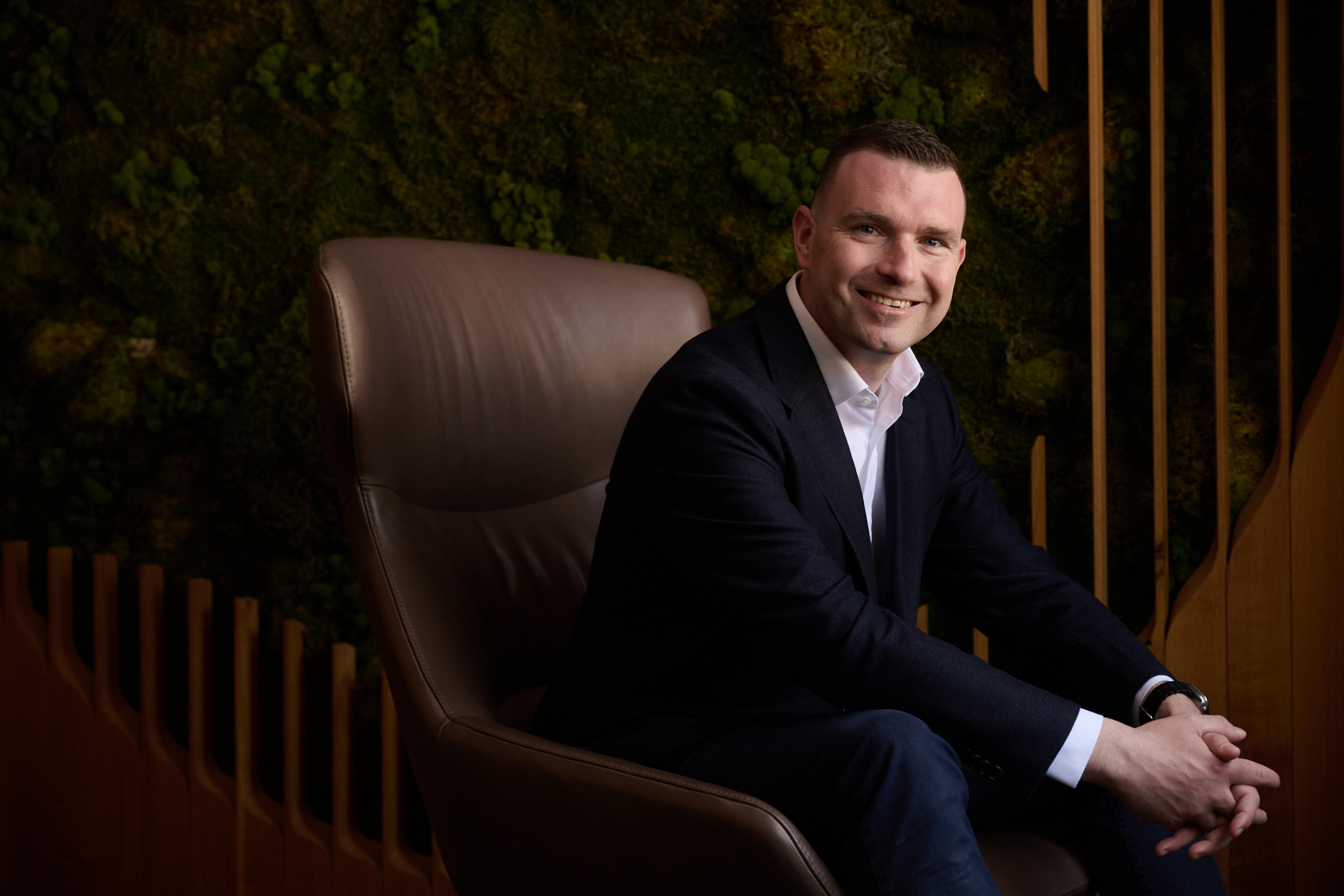

I've been thinking a lot about the direction we've chosen.
For me, being an AI-first CEO is not about adopting tools. It's about making a clear decision: to rebuild the company around AI as a core operating layer.
Not later. Now.
We are implementing this across an international company operating in multiple markets. This is not a local experiment. It's a deliberate move to build a system that can scale globally.
The company I see vs. the company we have today
In two or three years, I don't see a CEO waiting for reports or sitting through meetings to understand what's happening.
I see a CEO operating within an agentic system. A system that continuously processes data, monitors performance, evaluates decisions, and delivers real-time clarity.
Speed. Context. Truth.
In that world, the CEO doesn't spend time figuring out what's happening. The system does that. The CEO focuses on what actually matters: direction, priorities, people, and decisions.
That's why we're starting now.
We're still early — and that's the opportunity
Across markets, most companies are not meaningfully implementing AI. Some are experimenting. Most are watching.
Even in tech teams, the dominant mindset is caution. Security, reliability, unclear ROI.
I understand the concerns. But the gap between what AI can already do and how little it is being used is massive.
This is one of those moments where the advantage doesn't come from being right. It comes from moving early.
This became a strategic decision
At some point, I had to make a choice: watch this happen, or lead it.
I chose to lead it.
I took this to the board. Not as an experiment, but as a core strategic direction. We aligned on the approach and approved the AI implementation at the highest level.
From that moment, this stopped being a personal conviction. It became a company-wide mandate.
I was clear about one thing: there is no safe way into an AI-driven future that doesn't involve actually entering it.
Then I started rebuilding the company
Once the direction was set, execution had to follow.
I started aligning the organization around this shift. Clearly communicating what we are building, why it matters, and what it means for every function.
This is not optional.
Most people are still at the beginning with AI. Many are skeptical. That's expected. But I'm not waiting for full consensus.
I introduced an AI adoption rating as a core strategic initiative inside our internal people evaluation system. The goal is simple: move the entire organization from near-zero usage to a level aligned with where the company is heading.
That's how you drive real change.
How we actually kicked this off
I approached this in a structured way, focusing on three things: what, how, and who.
1. Rethinking the company architecture
One of the first steps was a review of our internal architecture.
We've been a data-oriented company from day one. Working with databases, reporting, and structured data is part of how we operate. That turned out to be a significant advantage. We didn't need to rebuild everything.
We adjusted our architecture to make it AI-ready — ensuring that data flows, systems, and access layers can support automation and agentic workflows.
This step is not visible from the outside. But it's foundational.
2. Deciding what to build — and what not to build
The second step was defining what we are actually going to build.
I identified a large number of potential AI use cases across the company. Far more than we could realistically execute.
The natural instinct is to move fast on everything. That's a mistake.
We narrowed our focus to a small number of initiatives with the highest potential impact, and committed to delivering them fully. In this phase, a few working systems matter more than dozens of unfinished ideas.
Execution over exploration.
3. Finding the right people to build it
The third step was about people.
I went to the global market to find individuals who actually understand AI implementation inside companies. Not theory. Not tools. Execution.
Location didn't matter. I brought in a small number of high-level specialists — AI architects — and embedded them into the company.
Each of them owns a specific initiative, together with our internal teams, with:
- clear scope
- measurable outcome
- defined timeline
This is not experimentation. It's structured execution.
What this means
We are not trying AI. We are systematically building capabilities that will define how the company operates in the future.
For me, AI is no longer a tool layer. It is becoming the operational backbone of how we build, decide, and scale as an international company.
Closing thought
The future is not going to wait for companies to feel ready.
The companies that win over the next 12, 24, 36 months will not be the ones that debated AI the longest. They will be the ones that:
- started early
- built real systems
- learned how to operate them
I'd rather be early and uncomfortable than late and irrelevant.
More soon.